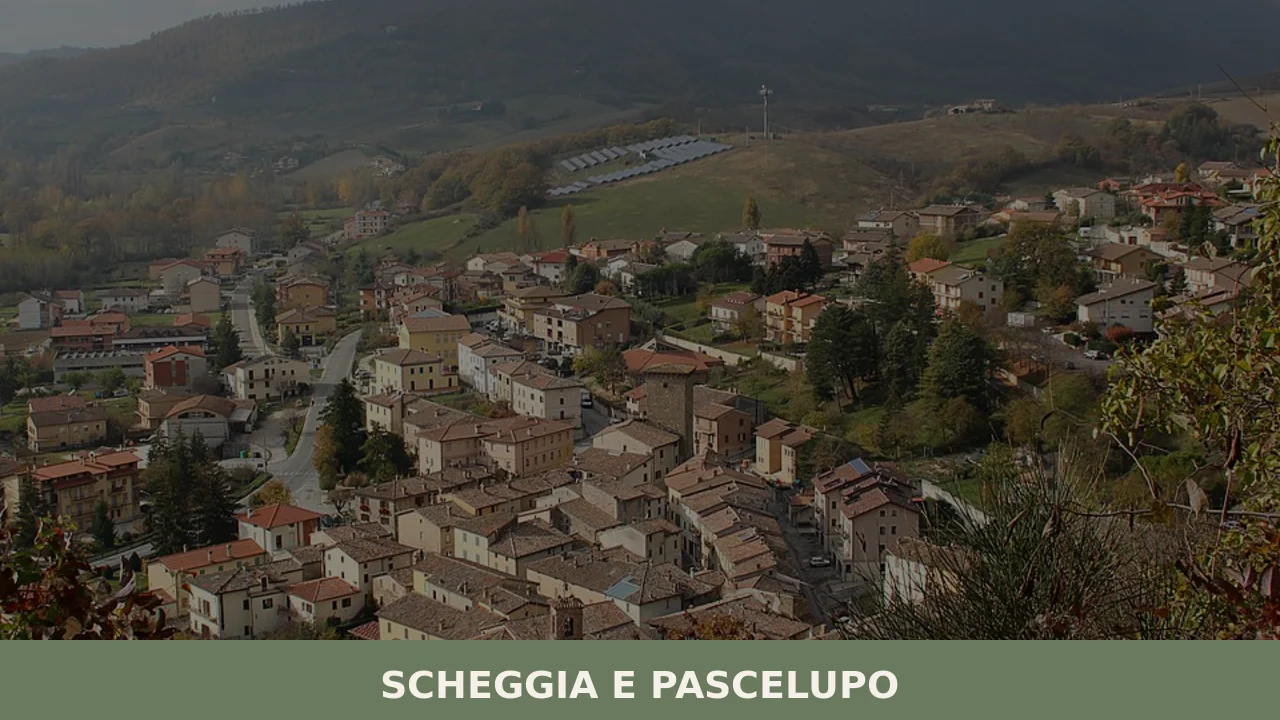
Tucked into the rugged green folds of the Umbrian Apennines, Scheggia e Pascelupo is one of those places that rewards the curious traveler — the kind who veers off the highway and follows a winding road just to see what’s around the next bend. If you’re wondering cosa vedere a Scheggia e Pascelupo, the answer is surprisingly rich: ancient Roman history, hermitages clinging to cliff faces, dense forests alive with wildlife, and a pair of villages that have quietly preserved their medieval character for centuries. This is Umbria at its most authentic, far from the tourist crowds yet brimming with genuine Italian soul.
The territory of Scheggia e Pascelupo has been a crossroads since antiquity. The village of Scheggia sits along the route of the ancient Via Flaminia, the Roman consular road that connected Rome to Rimini on the Adriatic coast. This strategic position meant the area witnessed the passage of legions, merchants, and pilgrims for centuries. One of the most significant historical events linked to this stretch of road was the Battle of Taginae (552 AD), fought between the Byzantine general Narses and the Ostrogothic king Totila — a clash that effectively ended Gothic rule in Italy. Historians believe the battle took place in the plains near Scheggia, making this quiet valley a turning point in European history.
During the medieval period, both Scheggia and the smaller hamlet of Pascelupo developed as fortified settlements under the influence of the Duchy of Spoleto and later the Papal States. The two communities were officially merged into a single municipality in the modern era, but each retains its own distinct identity and charm. Pascelupo, perched higher in the mountains, has an even more remote and unspoiled character — a place where time seems to move at the pace of the seasons.
Despite its small size, this municipality packs an impressive number of sights into its mountainous territory. Here are the highlights no visitor should miss:
Just outside Scheggia, this Romanesque abbey dates back to the early medieval period and is dedicated to Saint Emiliano, a bishop and martyr. The church’s austere stone façade and simple interior are a testament to the Benedictine monastic tradition that shaped much of Umbria’s spiritual and cultural landscape. It’s a peaceful spot, perfect for a moment of quiet reflection.
The sacred hermitages scattered across the slopes of Monte Cucco are among the most atmospheric sites in the area. These remote retreats were used by monks and hermits seeking solitude in the wilderness, and several can still be visited today via hiking trails. The interplay of ancient stone, dense forest, and mountain silence makes these places unforgettable.
The crown jewel of the natural landscape is undoubtedly the Parco Regionale del Monte Cucco, a protected area of extraordinary beauty. Monte Cucco itself rises to 1,566 meters and offers outstanding hiking, paragliding, and caving opportunities. The mountain’s karst geology has created an extensive network of underground caves, including the Grotta di Monte Cucco, one of the deepest cave systems in Italy. Whether you’re an experienced speleologist or simply love walking through beech forests with panoramic views, this park delivers.
The village center itself is a pleasure to explore on foot. Narrow stone lanes wind between medieval houses, opening onto small piazzas where locals gather. Look for fragments of the old fortifications, the parish church with its artworks, and the characteristic archways that frame views of the surrounding mountains. It’s the kind of place where a simple passeggiata becomes a journey through layers of history.
Don’t overlook the hamlet of Pascelupo, which sits in a more isolated valley and offers a glimpse of mountain village life that has changed remarkably little over the centuries. The compact cluster of stone buildings, the small church, and the enveloping silence of the forested hills make it a destination for anyone seeking genuine tranquility.
One of the great pleasures of visiting this corner of Umbria is using it as a base to explore the wider region. The Apennine landscape here is crisscrossed with trails connecting ancient villages, and the sense of discovery is constant. To the south, the beautiful village of Cerreto di Spoleto offers another fascinating example of Umbria’s hill-town heritage, while to the west, the celebrated borgo of Montone — one of Italy’s officially designated most beautiful villages — is well worth a day trip. Lovers of remote, time-forgotten places will also appreciate Monte Santa Maria Tiberina, a tiny feudal stronghold near the Tuscan border with a story all its own.
The cuisine of Scheggia e Pascelupo reflects its mountain setting. Expect hearty dishes built around truffles (both black and white varieties are found in the surrounding forests), wild mushrooms, locally cured meats, and handmade pasta like strangozzi. The area is also known for its lentils and other legumes grown at altitude, which have an intensity of flavor that lowland varieties simply can’t match. In autumn, local sagre (food festivals) celebrate the truffle harvest and other seasonal bounty — timing your visit to coincide with one of these events is a wonderful way to experience community life.
For an overview of regional tourism resources and upcoming events, the official Umbria Tourism website is an excellent starting point.
There’s something deeply satisfying about visiting a place like Scheggia e Pascelupo — a place that doesn’t shout for attention but quietly reveals its treasures to those who take the time to look. From Roman roads to underground caves, from mountain hermitages to truffle-scented kitchens, this Apennine borgo offers an experience of Italy that feels both ancient and refreshingly real. Ready to plan your visit? Explore the complete Scheggia e Pascelupo village guide for more details, photos, and travel inspiration.