There are villages in southern Italy that seem to exist solely to reward those who arrive with a camera in hand. Bagnolo del Salento is one of them. Tucked into the sun-drenched heel of the Italian peninsula, this small Salentine gem offers a visual feast of honey-colored stone, Baroque flourishes, and quiet piazzas drenched in Mediterranean light. If you’ve been searching for reasons to fotografare Bagnolo del Salento, you won’t need to look far — the entire village is essentially a living postcard. But to truly capture its soul, you need to know where to look, when to show up, and which hidden corners hold the most magic.
Bagnolo del Salento sits in the Province of Lecce, a few kilometers from the Adriatic coast and firmly within the cultural heartland of the Salento region. Unlike its more famous neighbors — Otranto, Lecce, Gallipoli — Bagnolo remains refreshingly unhurried. Its streets aren’t clogged with tour buses, and its piazzas still belong to the locals who gather there each evening for their ritual passeggiata.
For photographers, this translates into something invaluable: authenticity. You can frame a shot of an elderly woman hanging laundry from a wrought-iron balcony without a selfie stick photobombing the scene. You can wait for the golden hour to paint the local church façade without jostling for position. The village rewards patience and curiosity in equal measure.
Like many Salentine settlements, Bagnolo del Salento has roots that stretch back centuries. The area was influenced by Messapian, Roman, Byzantine, and Norman civilizations, each leaving subtle fingerprints on the built environment. The village’s layout — a tight cluster of limestone houses radiating from a central church and palazzo — reflects the defensive logic of medieval southern Italian towns.
The Baroque era, which swept through the Salento in the 17th and 18th centuries, left its most visible mark. Ornate doorways, carved stone window frames, and the exuberant façade of the parish church all date from this period. Understanding this layered history makes photographing the village far richer: you’re not just capturing pretty walls, you’re documenting centuries of human adaptation and artistry.
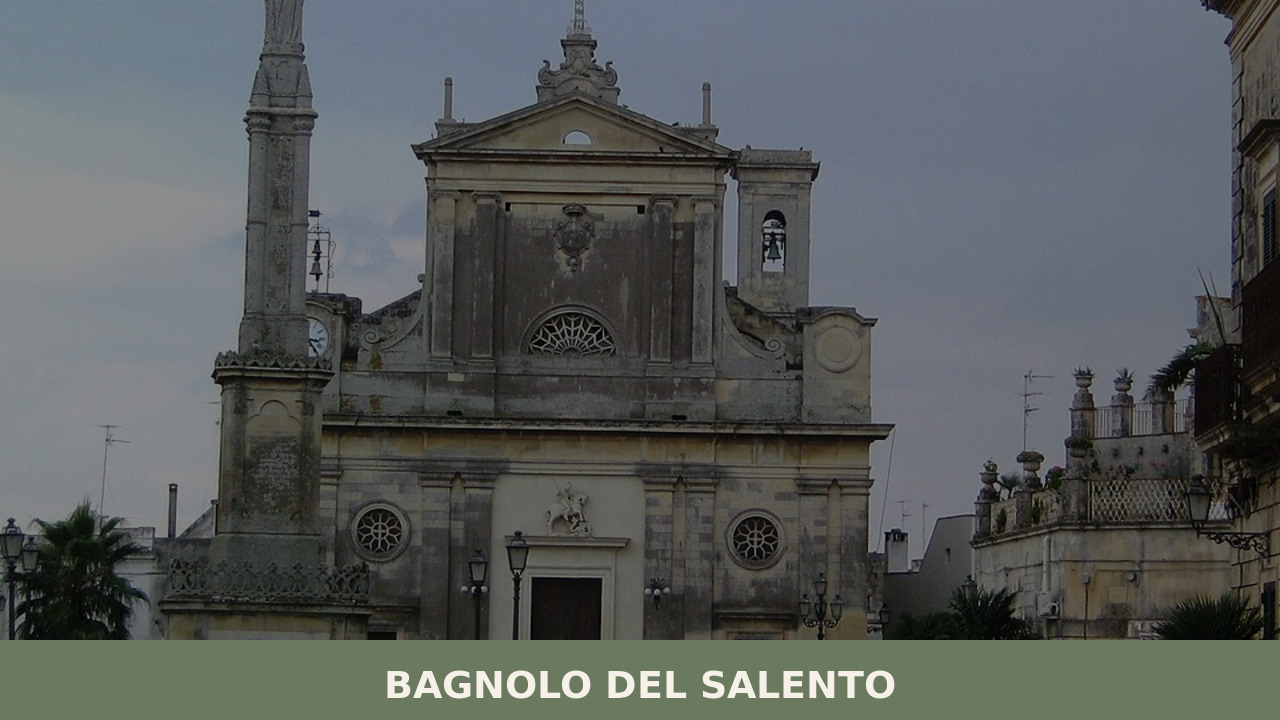
The village’s main church is the natural starting point for any photography walk. Its Baroque façade, typical of the Salento region, features carved limestone details that come alive in the warm light of late afternoon. Shoot from across the piazza to capture the full elevation, or move in close for textural details — the interplay of shadow in the stone carvings is extraordinary.
The baronial palace anchors the village’s historic center and speaks to the feudal power structures that once governed life here. Its imposing entrance, flanked by weathered stone, makes for a dramatic composition. Try shooting through the archway to frame the street scene beyond — a classic technique that works beautifully here.
This is where Bagnolo truly shines for street photography. The centro storico is a labyrinth of narrow alleys (vicoli) paved in local stone, with whitewashed walls occasionally interrupted by bursts of bougainvillea, painted shutters, or a rusting bicycle leaning against a doorframe. These lanes are best photographed in the early morning, when the low-angle light creates long, dramatic shadows, or at dusk, when warm artificial light spills from kitchen windows.
Step beyond the village boundary and you’ll find a landscape defined by ancient olive groves, red earth, and the iconic pajare — the conical dry-stone structures that are the Salentine answer to Puglia’s trulli. These make compelling subjects, especially when set against a stormy sky or framed by gnarled olive trunks.
If you’re building a photography itinerary across Italy’s lesser-known villages, consider extending your journey to other stunning borghi. While they’re farther afield in the Apulian subregion of Daunia, villages like Motta Montecorvino offer dramatic hilltop panoramas that contrast beautifully with the flat Salentine landscape. The medieval settlement of Panni provides moody, atmospheric compositions among ancient stone buildings, while Candela rewards visitors with sweeping views across the Tavoliere plain — ideal for landscape photographers who crave depth and scale.
No visit to the Salento is complete without fueling your creative work with local food. Bagnolo del Salento sits within one of Italy’s most underrated gastronomic regions. Seek out rustico leccese (flaky pastry filled with béchamel and mozzarella), ciceri e tria (a pasta and chickpea dish with fried pasta shards), and the legendary pasticciotto — a custard-filled pastry that locals eat for breakfast without a shred of guilt. Pair everything with a glass of Negroamaro or Primitivo from the surrounding vineyards. The official Puglia tourism portal is an excellent resource for planning food-focused detours in the area.
The secret to truly great photographs from a place like Bagnolo del Salento isn’t technical — it’s emotional. Slow down. Sit in the piazza with an espresso. Watch how the light moves across the stone. Listen to the conversations drifting from open windows. When you let the village reveal itself on its own terms, your camera will know exactly what to do.
Ready to start planning your visit? Explore our complete Bagnolo del Salento village guide for detailed information on history, attractions, accommodations, and everything else you need to make the most of this enchanting Salentine borgo. Your best shot is waiting.